Bienvenidos a mi página dedicada a los fans del grupo ABBA. Encontraréis aquí información y material que os ayudará a comprender mejor la vida y el entorno de ABBA.
We arrive at 1982, where
the year begins with two births: Emma, daughter of Björn and Lena, and Ludvig,
son of Benny and Mona.
It has been said that, for
this reason, Björn and Benny were not as productive and that they kept the
babies, but we can remember that during Agnetha's two pregnancies, life in the
studio was almost uninterrupted, even going so far as to replace Agnetha to
avoid disrupting her television obligations.
So the lack of desire to
work doesn't seem to have come from there, but simply from the weariness of
working on an ABBA album.
In the Aplauso program
recorded in February, again in Stockholm, it can be seen that, although the
four members answered José-Luis Uribarri's questions, none of them seemed to be
there.
By the end of the year, Björn
and Benny hadn't written enough songs to fill a new album—only three ABBA
singles had been released—and to make up for the lack of a new album, they
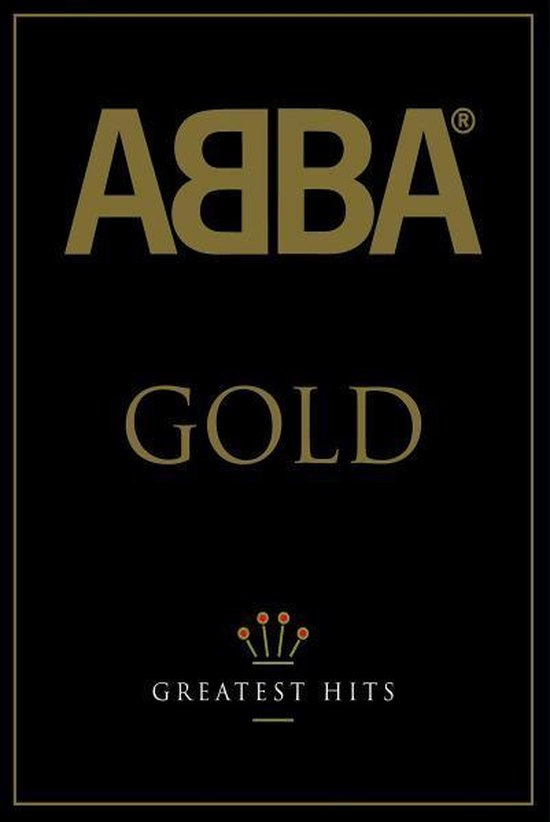
released the compilation "ABBA The Singles, The First Ten Years".
Looking at the cover, we
can see the members of ABBA smiling again, thanks to Rune Söderqvist and
photographer Lars Larson.
The double LP contains
almost all of the group's singles, plus two new tracks: "The Day Before
You Came" and "Under Attack".
In the same vein, Dutch
television recorded a program called "The ABBA Story" featuring an
interview with all four members of ABBA. This documentary was later released on
video and DVD and is arguably the first more or less complete ABBA biography to
that date.
ABBA ended the year
appearing on three television programs, first on "Show Express" in
Germany to present "The Day Before You Came," "Cassandra,"
and "Under Attack".
They then appeared on the
"Late Late Breakfast Show," which they actually appeared on twice.
The first time in November was to promote the compilation album "The
Singles," where each member chose a song from the album. The second time
in December was to perform "I Have A Dream" and "Under
Attack." This would be ABBA's last public appearance until 1986.
Just before that, they
appeared on the Swedish program "Nojesmakinen," where they performed
"Thank You For The Music" live and a playback of "Under Attack".
The long-awaited film
"The Movie" was released on video in 1982.
But 1982 didn't end with
ABBA. Although Björn and Benny aren't entirely sure how they'll write the next
musical, as they've already had interviews with Tim Rice, the girls are the
first to work outside the group that year.
Frida in 1982
Frida records a solo album
with Phil Collins as producer at Polar Music Studios. She selects eleven songs
from the 500 she's received. At first, Frida and Phil had some problems because
Frida, accustomed to not being involved in any of the production, limiting
herself to singing, expected everything from Phil. However, Phil wanted Frida
to be involved in all the decisions, so Frida had to adapt to this new way of
working, which, according to Phil, she did perfectly.
The first release of this
work is the single "I Know There's Something Going On" in August,
followed by the album in September. Frida launches a promotional campaign for
the album throughout Europe and the United States, resulting in relatively good
success in all these countries with the album and single.
In Sweden, despite poor
reviews, it was certified gold with 50,000 copies sold.
"I See Red,"
"Tell Me It's Over," "To Turn the Stone," and "Here
We'll Stay" (in 1983) were the singles released from the album.
Frida on Television in 1982
Agnetha in 1982
That same year, Agnetha
was cast in one of the lead roles in the film "Raskenstam," which
portrays the true story of a Swedish Don Juan in the 1940s who swindled around
100 women after seducing them.
She also recorded a duet
with Tomas Ledin on the song "Never Again," which she performed on
Swedish and German television and released as a single.
Después de ABBA
Until 2018, the four
members of ABBA would not work together again as ABBA, but their music would
never disappear, and the story continues with their albums and separate
activities.
Currently, since they have
no new material, they still release the studio albums on vinyl in various
colors, without any special interest for ABBA fans.
Benny, by nature, has
never stopped working. In fact, for him, it's a pleasure to play, discover, and
write music. Benny says that ABBA has provided him with the money that allows
him to do what he loves. So, in addition to the musicals he wrote with Björn,
he created his own record label and later his own. His son, Ludvig, built a
new, state-of-the-art recording studio and set up a second record label, RMV
Publishing, for modern artists.
After ABBA, Björn began to
appear extensively on television, defending various issues, one of which was
copyright, leading to his appointment as president of CISAC (The International
Confederation of Societies of Authors and Composers) in 2020.
As a musician and
composer, without Benny, he didn't do much.
Although ABBA stopped
recording in 1982, Stig continued to manage ABBA until 1989, when he decided to
sell the entire ABBA catalog to the record label Polygram. This sale marked the
beginning of a dispute between Björn, Benny, and Agnetha over their respective
shares. Frida had already sold her share to Stig, so there was no problem with
that at the time.
Finally, with the money
from the sale, Stig created the Polar Music Prize, a series of awards given
annually to two musicians who have distinguished themselves by advancing the
music industry. One prize goes to a classical music artist, and the other to a
pop or rock artist. Among those chosen are Paul McCartney, Sting, and Led
Zeppelin. The awards are presented by the King of Sweden, who continues to do
so every June to this day. This year's winners were Iggy Pop and the Ensemble
Intercontemporain.
Stig died of a heart
attack on September 12, 1997, and his funeral was broadcast live on Swedish
television.
After ABBA, Michael Tretow
was the most productive of the seven members, releasing no fewer than 14 albums
from 1981 to 2005. All of these albums are dedicated to children and are filled
with electronic music controlled by Michael.
Michael suffers
from Alzheimer's disease, so sadly, he doesn't recognize her work. Although he
was present at the museum's opening in 2013 and its expansion in 2018, he
didn't seem interested in either.
Görel replaced Stig after
his death, and although ABBA's catalog now belongs to Universal Music, she
continues to oversee the proper use of their music, in addition to representing
Björn, Benny, and Frida, while Agnetha is represented by Steffan Linde.
For Görel's 50th birthday
party, ABBA performed "Med En Enkil Tulipen," which remains
unreleased to this day.
In 1982, Björn and Benny,
along with Tim Rice, began writing a musical based on the lives of chess
players Viktor Korchnoi and Anatoly Karpov, spiced up, of course, with a
completely fictional love story.
Barbra Dickson, Elaine
Paige, and Murray Head were part of the cast, and it was there that Björn and
Benny discovered Tommy Körberg and Björn Skifs.
After the original London
versions in 1986 and the Broadway version two years later, several versions
have been staged around the world, so we'll only mention the most important
ones. These include Australia, where it was a huge success in 1991, Denmark in
2001, Sweden, where Benny discovered Helen Sjöholm in 2002, and another new
version for London in 2008 arranged by Tim Rice. There was also a Hungarian
version in 2010, and finally, in 2021, a Russian version staged in Moscow.
"I Know Him So
Well" was recorded in Spanish under the title "Lo Creo Conocer"
by the same actresses as the English version, but it never left the recording
studio.
In 1983, Björn and Benny
wrote the song "I Am The Seeker" for the English version of the
musical ABBAcadabra, which is found on the B-side of the single
"Time" from the same musical.
In 1983, Agnetha took a
year longer than Frida to launch her solo career, but to date, she has six
studio albums. The first, "Wrap Your Arms Around Me," was the most
successful due to its better promotion than the others. It was successful in
the United States, Australia, and especially in Europe, where it reached the
top of the charts in Scandinavia and Belgium. It was produced by Mike Chapman.
Three singles were
released from that album that same year: "The Heat Is On," "Wrap
Your Arms Around Me," and "Can't Shake Loose." The first two
were successful in Europe, and the third in the US.
Of the twelve songs, three
were written by Agnetha herself: "Stay," "Mister
Persuasion," and "Man".
A special concert,
"The Heat Is On," was recorded to promote the album.
In 1983, during
rehearsals, Björn and Benny asked Agnetha, who was in the studio, to play a
demo for Chess. It was called "Every Good Man," and it is the first
version of "Nobody's Side".